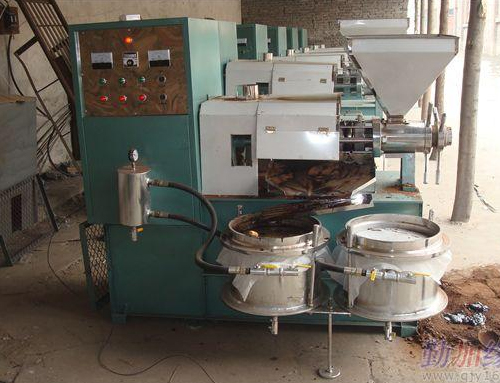
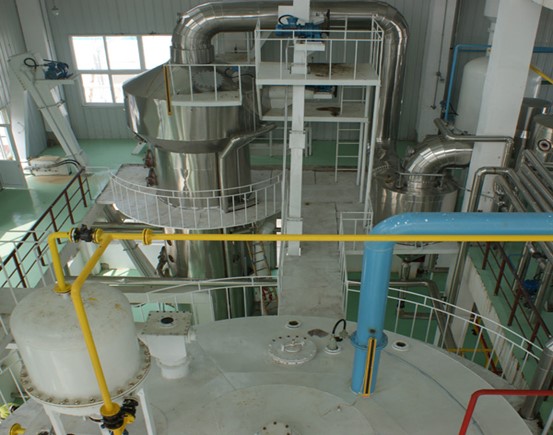
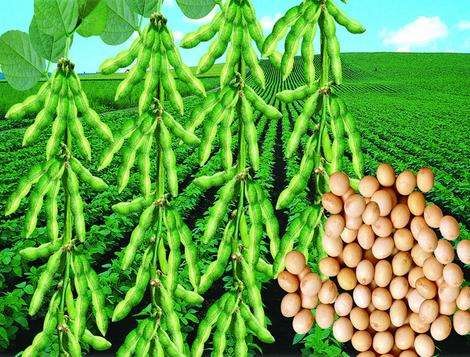
Extraction process of rapeseed oil machine
Extraction process of rapeseed oil machine
(1) Oil extraction stage
Process flow
The preform or pre-pressed cake formed by the oil material after pretreatment is sent to the extractor by the conveying equipment, and the concentrated mixed meal and wet meal are obtained after the solvent is leached.
extraction equipment The important equipment of the extraction system is the extractor, which has many forms.
Zhengzhou Dayang Company adopts continuous extractors-pan-type extractors, ring extractors, satellite extractors, crawler extractors, etc.
(2) Desolubilization and drying of wet meal
Process flow
The meal discharged from the extractor contains 25% to 35% of the solvent. In order to recover these solvents and obtain a good quality meal, heating can be used to evaporate the solvent.
Desolvation drying equipment
D. Dissolving and drying of the pre-pressed cake leached meals are mostly carried out by high-layer steaming and drying machines. Soybeans are leached with one-time solubilization and drying. D. T steam off-line.
(3) Evaporation and stripping of mixed oil
crafting process
Filtration of mixed oil – → mixed oil storage tank – → first evaporator – → second evaporator – → stripper – → extraction of crude oil
The mixed oil (a solution of grease and solvent) pumped from the extractor must be treated to separate the grease from the solvent. The separation method is to use the boiling points of oils and solvents to be different. First, the mixed oil is heated and evaporated, so that most of the solvent is vaporized and separated from the oils and fats. Then, by using the difference between the volatility of oils and solvents, the concentrated mixed oil is subjected to steam distillation (ie, steam stripping), and the residual solvent in the crude oil is distilled out, so as to obtain a leached crude oil with a low solvent content, Before evaporation and stripping, the mixed oil must be "pre-treated" to remove the solid meal and gelatinous substances, and create conditions for the separation of the components of the mixed oil.
Filter
The mixed oil is allowed to pass through the filter medium (screen), and the solid meal contained therein is trapped to obtain a relatively clean mixed oil. In the large-capacity flat-converted extractor, a tent-type filter is installed on the second oil collection grid, and the size of the filter screen is 100 mesh. The concentrated mixed oil is filtered and then pumped out.
Centrifugal sedimentation
At present, a hydrocyclone is used to separate the meal in the mixed oil. It uses the different weights of the components of the mixed oil, and uses centrifugal rotation to produce a difference in the centrifugal force, which causes the meal to sink and the liquid to rise to achieve a clean mixed oil the goal of.
Evaporation of mixed oil
Evaporation is a process in which a part of the solvent in the solution is vaporized by heating to increase the concentration of the solute in the solution, even if the volatile solvent is separated from the non-volatile solute. The evaporation of mixed oil is a process in which the oil is almost non-volatile, and the solvent has a low boiling point and is easy to volatilize. Most of the solvent is vaporized by heating, so that the concentration of oil and fat in the mixed oil is greatly increased.
In the selection of evaporation equipment, oil plants mostly use long tube evaporators (also known as "rising film evaporators"). It is characterized by a long heating pipe. After the preheating, the mixed oil enters the heating pipe from the lower part and rapidly boils, generating a large number of vapor bubbles and rising rapidly. The mixed oil is also driven by the rising vapor bubbles and pulled into a liquid film to rise along the tube wall, and the solvent continues to evaporate in the process. Since the heat transfer is performed in a thin film state, the evaporation efficiency is high. Its equipment is a long tube evaporator.
Stripping of mixed oil
By evaporation, the concentration of the mixed oil is greatly increased. However, the boiling point of the solvent also increases. Regardless of whether atmospheric evaporation is continued or changed to reduced pressure evaporation, it is quite difficult to basically remove the remaining solvent in the mixed oil. Only by stripping can the residual solvent in the mixed oil be substantially removed.
Stripping is steam distillation. The principle is that the mixed oil is incompatible with water, and direct pressure steam with a certain pressure is passed into the thick mixed oil with a high boiling point. At the same time, indirect steam is heated in the jacket of the equipment, so that Direct steam into the mixed oil does not cause condensation. The sum of the vapor pressure of the direct steam and the solvent is balanced with the external pressure, and the solvent is boiling, thereby reducing the boiling point of the high boiling point solvent. The uncondensed direct steam entrains the distilled solvent and enters the condenser for condensation recovery. Its equipment includes tube-type stripping tower, layer dish-type stripping tower and inclined plate type stripping tower.
(4) Condensation and cooling of solvent vapor
Process flow
Because the solvent vapors from the first and second evaporators do not contain water, they are cooled by the condenser and directly flow into the circulating solvent tank; the mixed vapors from the stripper and the steam dryer enter the condenser, and the condensed solvents, The water mixture flows into the water separator for water separation, the separated solvent flows into the circulating solvent tank, and the water enters the water-sealed pool and is then discharged into the sewer. If the water discharged from the water separator contains a solvent, it enters a cooking tank. After a small amount of solvent in the water is distilled off, the condensate from the condenser enters the water separator, and the waste water enters the water seal tank.
Condensation and cooling of solvent vapors
The so-called condensation, that is, the process of converting heat from a gas into a liquid at a certain temperature. Cooling refers to the process in which the temperature of the hot fluid decreases after the heat releases heat, but no phase change occurs. A single solvent vapor emits its own latent heat of evaporation at a fixed temperature and changes from a gaseous state to a liquid state. When the steam has just condensed, the cooling of the condensate begins. Therefore, what is done in the condenser is the two processes of condensation and cooling. In fact, the two processes cannot be completely separated. The two incompatible vapor mixtures, water vapor and solvent vapor, have different condensation points. Therefore, during the condensation process, the composition of the condensate obtained as the temperature decreases. However, they still undergo two processes of condensation and cooling in the condenser. Condensers that are commonly used at present include tubular condensers, spray condensers and plate condensers.
Solvent and water separation
When the mixed vapor from the steamer or stripper is condensed, it contains more water. The solvent is not easily soluble in water and lighter than water, and the solvent is separated from water to recover the solvent. This kind of separation equipment is called "solvent-water separator". At present, the water separation tank is used more.
Recovery of solvents in wastewater
The waste water discharged from the water separation tank should be treated by the water-sealing pond. The water-sealed pool should be close to the extraction workshop. The water-sealed pool is a three-chamber cement structure. Its protection height should not be less than 0.4 meters, the height of the closed water column should be greater than 2.4 times the protection height, and the capacity should not be less than 1.5 times the volume of the workshop's water tank The water inlet and outlet pipes are water-tight.
Under normal circumstances, the wastewater discharged from the water separator is treated by a water-sealed pond. However, when a large amount of meal debris is mixed in the water, part of the wastewater in an emulsified state should be sent to a wastewater cooking tank and heated to above 92 ° C with steam. But it does not exceed 98 ° C, the solvent contained in it is evaporated, and then recovered by the condenser.
(5) Recovery of solvents in free gas
Process flow
The air can enter the extractor with the feed, and enter the entire extraction equipment system to mix with the solvent vapor. This part of the air is called "free gas" because it cannot condense into a liquid. The accumulation of free gas for a long time increases the pressure in the system and affects the smooth operation of production. Therefore, free gas should be exhausted from the system in time. However, this part of the air contains a large amount of solvent vapor, and the solvent contained therein needs to be recovered before being discharged. The free gas from the extractor, the water separation tank, the mixed oil storage tank, the condenser, and the solvent circulation tank are all collected in the air balance tank, and then enter the final condenser. Some oil mills combine the air balance tank with the final condenser. After the solvent contained in the free gas is partially condensed and recovered, the uncondensed gas still contains a small amount of solvent, and it should be recovered as far as possible before the exhaust gas is evacuated.
Process equipment paraffin oil tail gas recovery method, low temperature freezing method.