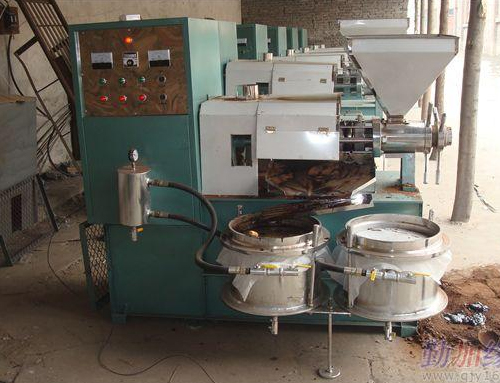
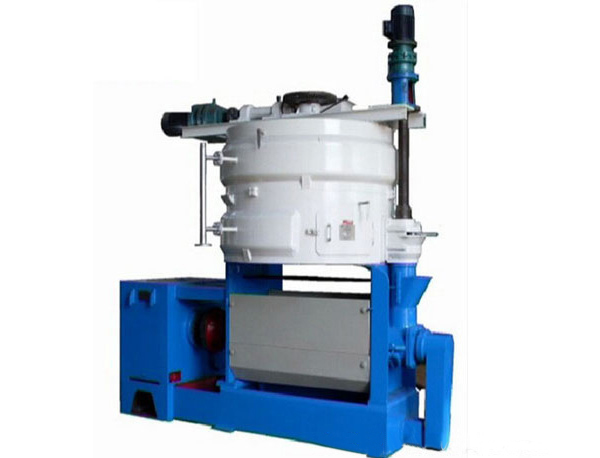
Rapeseed oil machine
Rapeseed oil machine
1.Raw material cleaning of rapeseed oil machine
(1) Rapeseed will be mixed with some impurities such as sand, gravel, soil, stems and leaves and iron during the process of harvesting, drying, transportation and storage. If it is not removed before production, it will be very unfavorable to the production process and the impurities contained in the oil Can be divided into three categories of inorganic impurities, organic impurities and oily impurities.
① Inorganic impurities: soil, sand, dust, metal, etc.
② Organic impurities Stems and leaves, ropes, husks and other seeds.
③ Oily impurities: Immature grains and heterogeneous oilseeds, such as broken oilseeds and diseased insect grains below the mesh size.
(2) The so-called oil cleaning is a general term for the process of removing impurities contained in oil. For the cleaning process requirements, not only the content of impurities in the oil must be limited, but also the content of oil in the scraps obtained after cleaning.
① Screening: Screening is a method that uses the difference in particle size (width, thickness, length) between the oil material and the impurities to separate the impurities by means of sieve holes.
② Magnetic separation: Magnetic separation is a method of removing magnetic metal impurities in oil by using magnetic force.
③ Cleansing of side by side mud: The soil aggregates whose shape and size are equal to or similar to those of oilseeds, and whose specific gravity is not significantly different from that of oilseeds, are called "side by side mud", especially in rapeseed, where the content of side by side mud is relatively large However, it cannot be effectively removed by screening and wind selection equipment, and a special method and equipment must be used.
Zh3. Raw material drying of rapeseed oil machineOil drying refers to the process of dehydrating high-moisture oil to a suitable moisture. Oil is sometimes harvested during the rainy season, so the moisture content is high. For safe storage and proper moisture, drying is necessary.Using drying equipment to heat the oil can vaporize some of the water. At the same time, the humidity in the air surrounding the oil must be less than the surface humidity of the oil at this temperature. In this way, a humidity difference is formed, so that the water in the oil can continuously vaporize and escape. Atmospheric, and in a unit time, the more the amount of air passing through the surface of the oil, the faster the dehydration of the oil, and the drying equipment forcibly passes hot air to dry, which is based on this principle.
Zh4. Raw material crushing of rapeseed oil machineMechanically, the process of reducing the size of the oil is called crushing. The purpose of crushing is to change the particle size of large-grain oil to facilitate rolling. For pre-pressed cakes, it is to make the cakes moderate in size and to create good oil extraction conditions for leaching or second pressing.
5. Oil softeningSoftening is to adjust the moisture and temperature of the oil to make it soft. Process of increasing plasticity. In order to achieve the requirements of the rolling embryo, softening is indispensable for oilseeds such as rapeseed and cottonseed, which have less water content. For rapeseed, because of the low moisture content and low temperature, rolling the embryo without softening will inevitably produce a lot of powder, which is difficult to meet the requirements.
6. Oilseed rolling of rapeseed oil machineRolled embryos are also called "compressed tablets", "rolled tablets". It is the process of pressing the oil material from granules into thin sheets by using mechanical action. The purpose of rolling the embryo is to destroy the cell structure of the oil and create favorable conditions for steaming and frying, so that the fat can be smoothly separated during pressing or leaching.The basic requirements for rolled embryos are that the blanks are thin, the surface is uniform, the powder is small, and no oil is exposed. The hands are soft and loose, and the powder is controlled to less than 10% to 15% under the sieve with a sieve opening of 1 mm. , The thickness of the material embryo: rapeseed below 0.35 mm. After rolling the embryo, the material embryo is heated to control the immersion moisture content at about 7% and the powder degree to be less than 10%.
7. Rapeseed oil machine raw materials steamingOil steaming refers to the process of moistening, heating, steaming, and frying the embryos to make them undergo certain physical and chemical changes, change their internal structure, and transform mature embryos.Steaming and frying is one of the important processes in the oil production process. Because steaming can rely on the effect of moisture and temperature, the internal structure of the oil changes greatly, such as further damage to cells, coagulation and denaturation of proteins, isolation and binding of phospholipids and gossypol, and these changes are not only beneficial to oils and fats. It is relatively easy to separate from the oil, and is conducive to the improvement of the quality of crude oil. Therefore, the effect of steaming and frying has a direct impact on the smooth progress of the entire oil production process, the level of oil output, and the quality of oil products and cakes.
8. Rapeseed oil machine squeezing partPower spiral oil press mechanism oil The screw oil press is driven by power and uses the screw shaft to continuously rotate in the press cage to squeeze the raw material to extract oil. The oil pressing workshop is used as a pre-pressing workshop, so a buffer cake storage can be considered between this workshop and the leaching workshop, so that the pre-pressing cake can be temporarily stacked when the leaching workshop fails.
10. FilterAnother stage of pretreatment is the filtration stage. After filtering, the crude oil is refined or leached.